1. Introduction
The black soldier fly, Hermetia illucens (L.), is a stratiomyid of American origin that now occurs through the warmer parts of the world. Its larvae are voracious saprophages, and the idea of using them to manage manure dates back decades: Sheppard et al. (1994) described a system in which larvae reared under caged laying hens reduced the manure and yielded a feedstuff. The insect has since moved from a curiosity of poultry houses to the centre of a commercial industry (Tomberlin and van Huis, 2020), carried by interest in insects as a source of feed protein (van Huis, 2013).
What the larva achieves is considerable. On a suitable feeding regime it removes a large share of the dry matter of its feed while converting part of it to prepupal biomass (Diener et al., 2009). It does this on substrates that are heavily colonised by bacteria and fungi, some of them pathogens of vertebrates, and it emerges from them in good health. Both facts point to the gut and its residents.
Insect guts in general house microbial communities that supply enzymes, synthesise nutrients, detoxify dietary compounds and exclude invaders (Engel and Moran, 2013; Douglas, 2015). This review asks how far those roles have been shown for the black soldier fly, and what follows for the design of bioconversion processes.
2. Scope and Approach
The review is narrative. It is built on the primary studies that characterised the larval gut and its bacteria, on experiments that manipulated the community or measured its effects, and on earlier reviews of the microbiology of rearing (De Smet et al., 2018) and of waste decomposition by the larvae (Gold et al., 2018). The literature was not searched to a formal protocol, and no count of records is offered. Bacteria receive most of the attention because most of the published work concerns them. Table 1 groups the main themes with representative sources.
| Theme | What the literature reports | Representative sources |
|---|---|---|
| Gut regions | Midgut regions differ in pH and enzymes and hold different communities | Bonelli et al., 2019; Bruno et al., 2019 |
| Composition | Proteobacteria, Firmicutes and Bacteroidetes dominate; a few genera recur | Jeon et al., 2011; Klammsteiner et al., 2020 |
| Diet and site | Community shifts with substrate and differs between rearing facilities | Wynants et al., 2019 |
| Life stages | Some bacteria persist from egg to adult | Zheng et al., 2013a |
| Added bacteria | Inoculating manure with selected strains can improve larval growth | Yu et al., 2011 |
| Pathogens | Larval treatment lowers some enteric bacteria, not all organisms | Erickson et al., 2004; Lalander et al., 2013 |
| Contaminants | Gut bacteria contribute to antibiotic breakdown | Cai et al., 2018 |
3. The Gut as a Habitat
The larval midgut is long and is far from uniform. Bonelli et al. (2019) showed that it comprises three regions with distinct cell types and luminal conditions: an anterior region, a strongly acidic middle region, and a posterior region in which the contents return to neutral or alkaline values and most digestion and absorption take place. The acid zone, together with lysozyme, resembles the arrangement in house fly and blow fly larvae and is thought to kill a large part of the ingested bacteria, which are then digested as food.
The larva also brings an unusually broad immune repertoire to its diet. The genome encodes a large and diversified set of antimicrobial peptides, and their expression changes with the substrate and its bacterial load (Vogel et al., 2018; Zhan et al., 2020). Digestive enzymes are abundant and varied; amylase, lipase and protease activities in gut extracts were reported to be higher than in house fly larvae (Kim et al., 2011). The microbiota therefore lives in a selective environment. Whatever persists there has passed an acid barrier, a battery of peptides and a rapid flow of food.
Sampling the gut region by region confirms that the community is structured accordingly. Bruno et al. (2019) found that bacterial composition and density differed along the midgut, with the acid middle region acting as a bottleneck and the posterior region supporting the highest load. Studies that homogenise whole guts, or whole larvae, average over this structure, which should be remembered when their results are compared.
4. Composition of the Community
The first sequencing study of the gut, by Jeon et al. (2011), compared larvae fed food waste, cooked rice and calf forage. The communities differed between diets, were distinct from those reported for other insects, and yielded isolates with amylase, cellulase, protease and lipase activity. Later work with deeper sequencing has kept the outline. At phylum level the gut is dominated by Proteobacteria, Firmicutes and Bacteroidetes, with Actinobacteria as a smaller component, and the proportions move with the feed.
Whether a stable core exists beneath that variation has been a recurring question. Klammsteiner et al. (2020) reared larvae on three contrasting diets with low microbial loads and found a set of genera present throughout, among them Dysgonomonas, Enterococcus, Morganella and Actinomyces. The same names, together with Providencia and Klebsiella, appear repeatedly in other studies. Dysgonomonas is of particular interest because members of the genus degrade complex polysaccharides and occur in the guts of termites and other insects.
Transmission between generations offers one explanation for a core. Zheng et al. (2013a) sequenced bacteria from eggs, larvae, prepupae, pupae and adults and found that part of the community was present at every stage, the egg included. Bacteria associated with the eggs also influence where females lay: gravid flies responded to bacteria isolated from conspecific eggs and from competing species (Zheng et al., 2013b). The fly appears to seed its offspring's substrate and to read the microbial state of a resource before using it.
5. Diet, Site and Scale
Against the evidence for a core stands strong evidence for environmental control. Wynants et al. (2019) followed the bacteria of substrate, larvae and residue in rearing runs at laboratory and industrial scale in several facilities. Communities differed markedly between locations, even on comparable feeds, and the larval microbiota was related to that of the substrate without mirroring it. Each facility seemed to have something of a house microbiota, shaped by its feedstock, its colony and its routines.
The practical meaning is that results from one diet and one colony should not be assumed for another. A strain reared for generations on a cereal-based nursery feed and then placed on fruit waste or manure will be colonised from the new substrate within days. The gut community at harvest reflects the larva's filters acting on the organisms that the feed supplies.
6. What the Microbiota Contributes
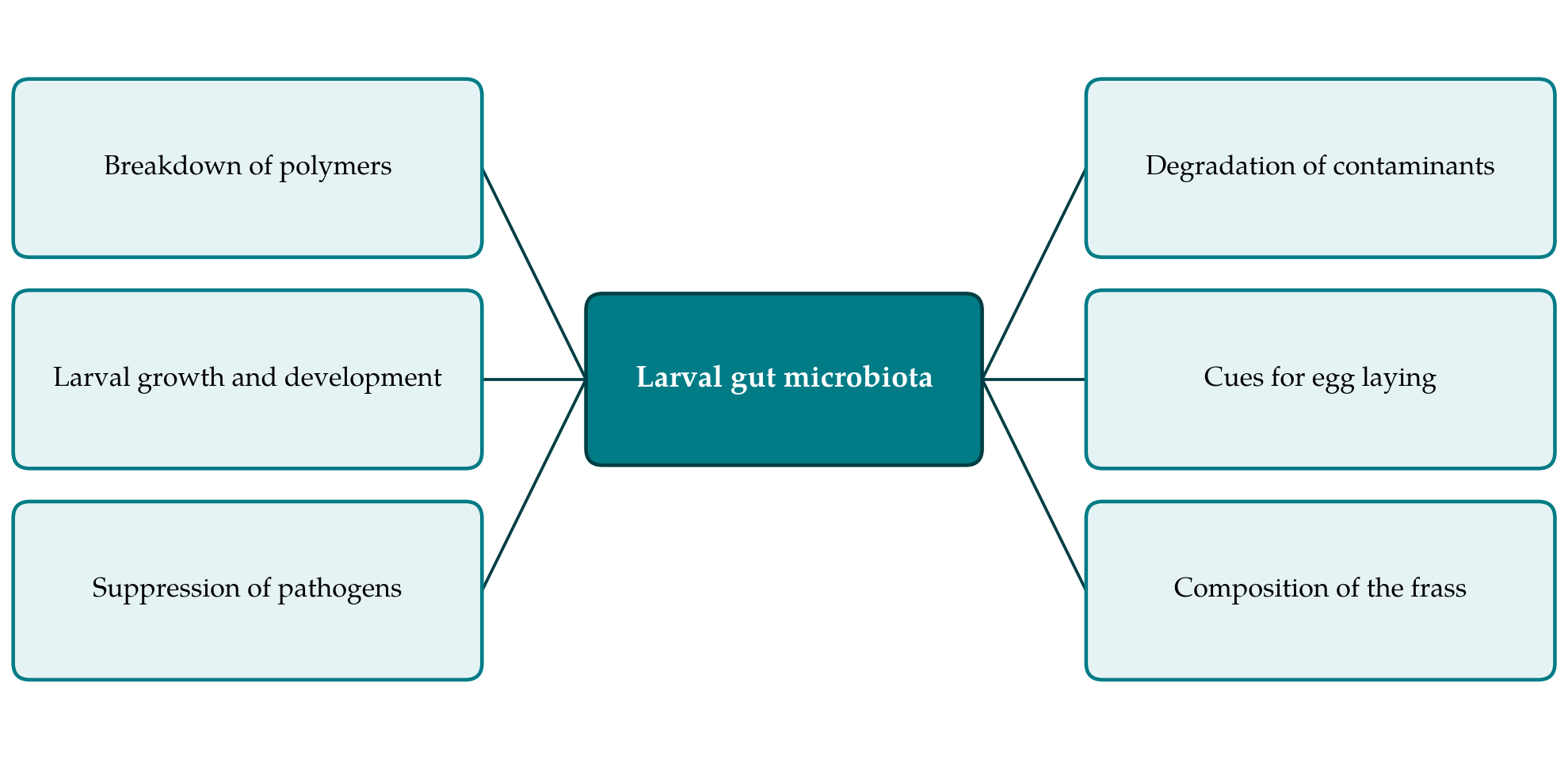
Figure 1 summarises the roles that have been attributed to the gut community. They rest on evidence of differing strength, and the following subsections keep them apart.
6.1. Digestion and growth
The case for a digestive role is partly inferential. Bacteria isolated from the gut secrete enzymes that hydrolyse starch, cellulose, protein and lipid (Jeon et al., 2011), and metagenomic analysis of larvae converting food waste found the gut community rich in genes for carbohydrate, protein and lipid metabolism (Jiang et al., 2019). Such findings show capacity. They do not show how much of the larva's digestion depends on microbial as opposed to its own enzymes, and for fibrous substrates, which the larvae convert poorly, the limits of that capacity are evident (Gold et al., 2018).
Direct evidence comes from addition experiments. Yu et al. (2011) inoculated poultry manure with strains of Bacillus subtilis, some isolated from the larvae themselves, and recorded heavier prepupae and shorter development than on untreated manure. Whether the added organisms act inside the gut, by pre-digesting the substrate outside it, or simply as extra food is seldom resolved.
6.2. Pathogen reduction
Larval treatment lowers the numbers of several enteric bacteria in waste. Erickson et al. (2004) recorded faster decline of Escherichia coli O157:H7 and Salmonella enterica in chicken manure with larvae than without, and Liu et al. (2008) found a temperature-dependent reduction of E. coli in dairy manure. In human faecal sludge, Salmonella fell sharply during treatment, whereas the eggs of the nematode Ascaris were not inactivated (Lalander et al., 2013). The effect is real and selective. It is commonly ascribed to gut acidity, antimicrobial peptides and competition from resident bacteria acting together, although their separate contributions have not been measured. Rearing surveys also report that some spore-forming and other food-safety organisms persist in larvae and residue (Wynants et al., 2019), so processing after harvest remains necessary.
6.3. Contaminant degradation
The clearest demonstration that gut bacteria do work the larva cannot do alone concerns an antibiotic. Cai et al. (2018) compared tetracycline loss in substrate treated with conventional larvae, with larvae lacking their intestinal bacteria, and with no larvae. Degradation was far greater with the intact association; resistance genes and degradation products were identified, and the authors proposed a pathway. The result matters for manure from treated livestock. It also raises a question about the fate of resistance genes in a process that concentrates gut bacteria in the residue.
7. Managing the Community in Practice
Two routes to management follow from the literature. One is inoculation: adding defined strains to the substrate, or to young larvae, to speed conversion or widen the range of usable feedstocks. The experiments cited above show that this can work at bench scale. The other is indirect, through the substrate itself: its moisture, particle size, carbon to nitrogen balance and any fermentation before feeding all change which organisms the larvae encounter. Operators already adjust these variables for larval performance, usually without microbial data.
Regulation sets the frame within which either route is applied. In the European Union, processed protein from black soldier fly and six other insect species may be fed to farmed fish under Commission Regulation (EU) 2017/893, provided the insects were raised on materials already permitted as feed for farmed animals. Manure and catering waste, the substrates on which much of the microbiological research was done, are excluded. Findings about pathogen reduction in manure are therefore of most immediate use in jurisdictions and applications where such substrates are allowed.
8. Gaps and Future Work
Several limits of the evidence recur. Most studies describe who is present from amplicon sequences of a single gene and infer function from taxonomy. Fungi, archaea, protists and viruses in the gut have barely been examined, though yeasts and moulds are abundant in the substrates. Experiments with germ-free or defined-community larvae, the standard way of establishing what a microbiota does, are still few for this species. And much of the work was done in small containers over one generation, far from the conditions of a facility processing tonnes of material a day.
Progress would come from studies that separate the gut regions, follow the same colony across substrates and generations, and couple community data to measured rates of conversion. Reporting the substrate, the colony's history and the rearing conditions in enough detail to allow comparison would make existing data far more useful than they are now.
9. Conclusion
The bacterial community of the black soldier fly gut is filtered by a compartmented and chemically harsh midgut, includes a handful of genera that recur across diets, and otherwise follows the feed and the facility. It supplies hydrolytic enzymes, can raise larval growth when suitable strains are added, takes part in the suppression of certain enteric pathogens and degrades at least one antibiotic that the larva alone handles poorly. These contributions justify treating the larva and its microbiota as one working system. How to manage that system reliably at scale is not yet known, and the experiments that would show it have mostly still to be done.
Conflict of interest
To be declared by the author(s) before publication.
Funding
To be declared by the author(s) before publication.